
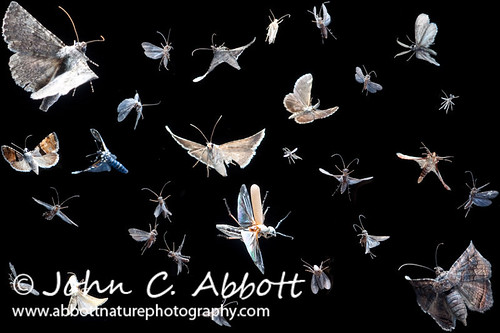
This is a composite of many moths, beetles, true bugs, caddisflies, and true flies that came to a light I had setup throughout the night.

This Armyworm moth visited the light frequently one night. The larvae can be very destructive on a variety of crops and considered serious pests.
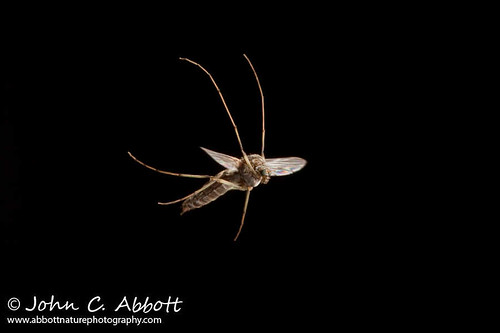
This is not a mosquito, but rather a non-biting midge in the family Chironomidae. They are really neat when seen up close. Like mosquitoes, their larvae are aquatic, but as their name implies, they cannot bite and are harmless.
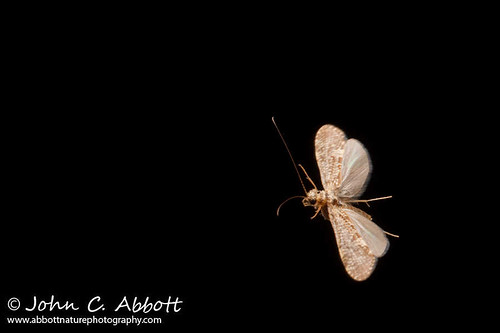
This is the adult of a net-spinning caddisfly in the family Hydropsychidae. This group of insects have aquatic larvae. The adults look like moths, but they have hairs on their wings rather than scales and they lack the coiled proboscis found in moths and butterflies.
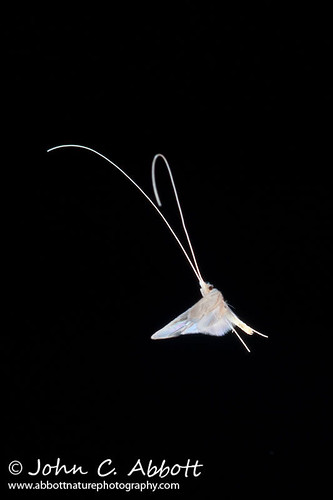
This caddisfly belongs in the family Leptoceridae. They are called Long-horned caddisflies because they have very long antennae.
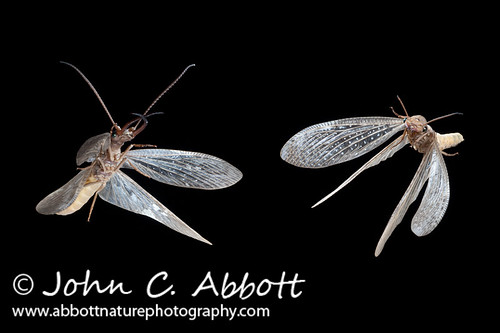
This is one of my favorite insects, the dobsonfly. The larvae are aquatic, called helgramites, and are often used for fish bait. The adults are short-lived, secretive and thus rarely seen by the casual observer. Males (left) in this group have very long sickle-shaped mandibles that they use to grab a hold of the female (right) with during mating. They are large and really cool looking!


Love it! The detail on these little guys is really amazing and something you don't see with your naked eye!
ReplyDeleteRarely one gets to capture these Dobsonfly so clearly. I am still amused to see so much of detailing here in pictures.
ReplyDelete